

AI chatbots have become essential in sectors like e-commerce and healthcare, transforming how companies interact with their clients (Shahzad et al., 2024). These tools have shown their worth by simplifying procedures, reducing response times, and offering round-the-clock assistance. In this blog post, we will analyze top best AI chatbots for automative industry that perform multiple functions, such as managing customer queries and scheduling test drives.
>> Read full blog post here: AI in automative industry about automouse vehicle futures

1. AI Chatbots in the Automative Industry
AI chatbots are being used by the automobile sector more and more for a range of duties, such as addressing maintenance issues, scheduling test drives, managing after-sales assistance, and responding to consumer requests. Without the need for human employees around-the-clock, these technologies provide real-time support by giving prompt answers on car models, finance alternatives, or servicing schedules. This translates into improved customer satisfaction and more efficient operations for dealerships. Manufacturers have the chance to increase brand loyalty by providing smooth assistance.
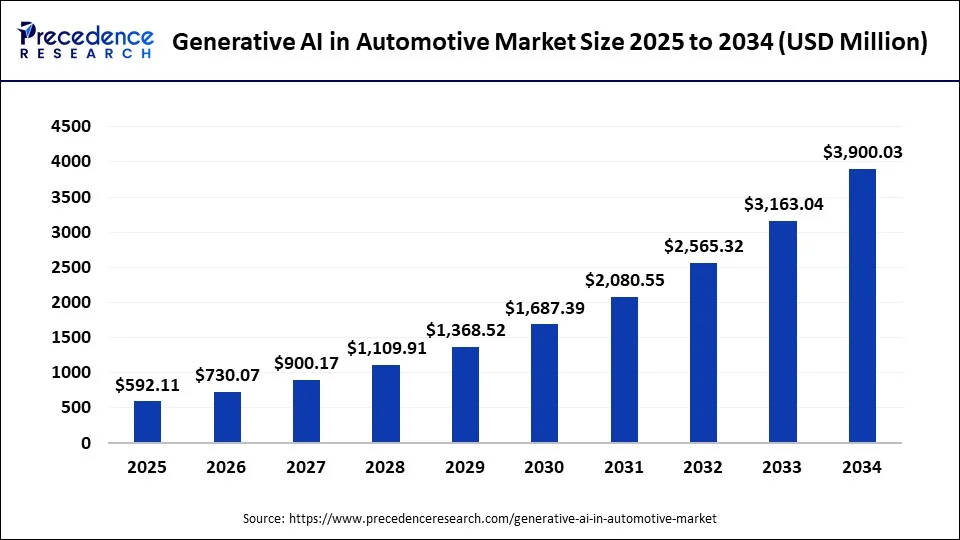
According to the Precedence Research (2025), the generative AI market within the automotive sector was valued at approximately $387.54 million and is projected to surge to around $2,691.92 million by 2032. This rapid expansion reflects a robust Compound Annual Growth Rate (CAGR) of 24.03% between 2023 and 2032, highlighting the industry’s dynamic transformation and the accelerating adoption of AI technologies in automotive innovation. AI-powered chatbots for the automotive industry are also transforming this field.
Not only automative, Verysell AI also analyses AI chatbots for e-commerce that improve customer assistance.
2. Where AI Chatbots Fit in the Automotive Customer Journey
The client journey in the automobile industry is intrinsically complicated. Customers frequently encounter several touchpoints that might impede their progress, whether they are buying a car, arranging services, or asking about finance and AI chatbots are excellent in this situation (Marjerison et al., 2025). Serving as round-the-clock virtual assistants, they solve typical problems by providing immediate assistance, simplifying procedures, and boosting productivity. The automobile sector is changing as a result of AI chatbots:
2.1 Enquiry Handling
AI chatbots serves as the initial point of contact for consumer inquiries, effectively responding to queries regarding car models, costs, availability, or financing choices (Dilmegani, 2025). Customers obtain prompt, precise responses rather of having to wait on hold or for email responses. Chatbots facilitate quick and simple information access, whether the issue is about fuel efficiency, electric battery ranges, or certain trim packages.

For instance, a consumer may inquire, “Which Honda models have hybrid options?” Making an informed choice is made possible by the chatbot’s instantaneous provision of a well selected list of models, complete with features, costs, and links to user reviews or video demos. Additionally, chatbots are multilingual, which makes them essential for catering to a wide range of consumers and guaranteeing accessible for everyone.
2.2 Test Drive Bookings
Traditionally, scheduling a test drive required back-and-forth contact with dealership employees, which frequently resulted in delays or misunderstandings. This procedure is made easier by the integration of AI chatbots into dealership scheduling systems. Customers may schedule appointments more easily since they have real-time access to open time slots.

A consumer may say, for example, “I’d like to test drive a Toyota RAV4 this Friday afternoon.” The chatbot can complete the booking, check available times, and even send reminders before to the meeting. Therefore, by removing pointless obstacles, this simplified method increases customer happiness and saves time.
2.3 Lead Generation
While most showroom visits occur during regular business hours, customers frequently browse online and submit inquiries at any time of day. This creates a gap in lead generation when sales teams are unavailable. AI chatbots bridge this gap by capturing leads and engaging potential buyers outside of office hours, ensuring no opportunity is missed.

Example: A chatbot might prompt a late-night web visitor with, “Would you like us to call you tomorrow to discuss leasing options for the BMW 3 Series?” By collecting the customer’s details and preferences, the chatbot ensures a seamless handoff to the sales team during business hours. From that, chatbots can also promote limited-time offers or discounts, creating a sense of urgency that drives conversions.
2.4 After-sales Support
The after-sales experience is crucial for fostering long-term customer loyalty. AI chatbots simplify this process by helping with service bookings, providing warranty details, answering repair-related inquiries, and more. Customers can easily ask for service centre locations, pricing information, or available time slots without navigating cumbersome systems.

For example, A customer might ask, “When can I book a maintenance check for my Ford Escape?” The chatbot can instantly show open dates, book the appointment, and send confirmation emails. In addition, chatbots can remind customers of upcoming appointments, suggest additional services, and offer troubleshooting tips, making after-sales support more proactive and user-friendly.
3. Why Chatbots Work in Automative Industry
Speed, ease, and accessibility are not only desirable but also essential when making large purchases like cars. Customers expect prompt responses and flawless experiences because rival dealerships are only a click away. Automotive companies must meet this issue in today’s digital-first environment or risk losing important leads to competitors who are more responsive.
They are revolutionizing the way automakers and dealerships interact with consumers, providing a potent means of improving the purchasing process. These clever gadgets can quickly respond to a variety of questions, from setting up test drives or maintenance appointments to giving information on car features and costs. Chatbots decrease annoying wait periods and enable prospective customers to make quicker, more informed selections by providing real-time replies. This translates into increased productivity, improved conversion rates, and a better capacity to draw in and keep clients for enterprises.
AI chatbots are now essential for automakers as digital interactions are increasingly dictating how consumers purchase and maintain cars. They offer individualized, captivating experiences that go beyond speed and convenience and give clients a sense of worth. Chatbots provide a competitive advantage in a quickly changing sector by optimizing processes, providing outstanding customer service, and cultivating enduring connections. They are becoming necessary for dealerships looking to differentiate themselves.
4. 5 Steps to Implement AI in Automative with ROI
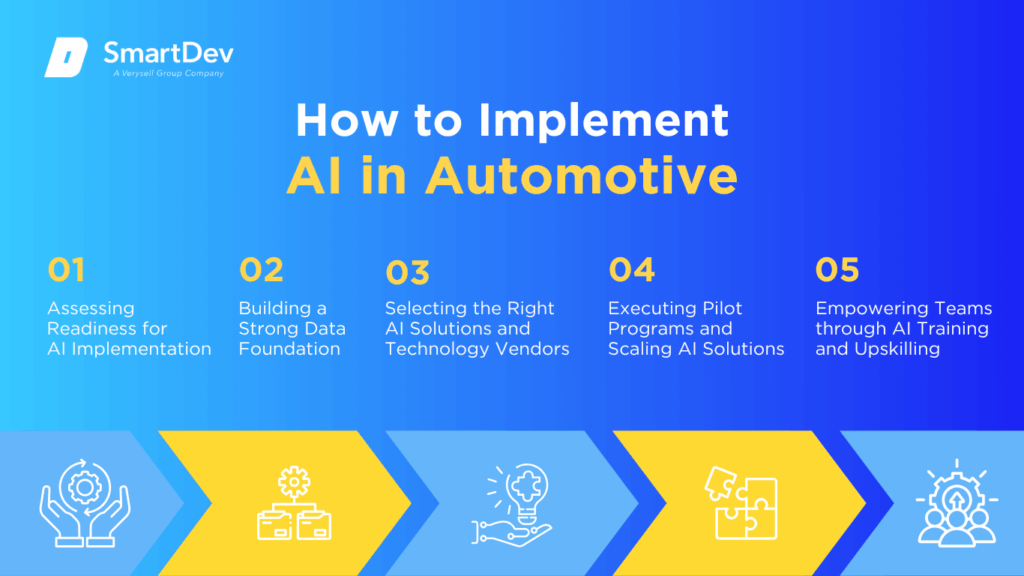
According to SmartDev (2025), there are 5 steps to implement AI in automative industry, from assessing readiness for AI adoption, building a strong data foundation, choosing the right tools and vendors, pilot testing and scaling up to training teams for implementing as the final stage.
Monitoring particular indicators that show the impact of the technology is necessary to assess the return on investment (ROI) of AI efforts. Increased efficiency is indicated by productivity gains, such as shorter design and production timelines. Financial advantages are demonstrated by cost reductions attained through automation and predictive maintenance. AI’s efficacy may also be determined by customer happiness and engagement levels, especially when it comes to areas like individualized services and support. Monitoring these measures over time gives information on the sustainability and long-term worth of AI investments.
5. How Verysell AI Keep Movement
Enhancing AI customer interactions with natural language processing (NLP) is a better way. Generative AI combined with advanced natural language processing (NLP) has the potential to address these shortcomings and transform customer interactions.
5.1 The Power of Smarter Chatbots
Unlike traditional scripted bots, generative AI-powered assistants can truly “understand” user intent. NLP enables greater context-awareness and dynamic conversation capabilities. Chatbots could:
- Answer complex questions about car specifications, financing plans, or service packages.
- Schedule test drives by syncing directly with dealer calendars in real time.
- Handle end-to-end queries for car rentals, from availability checks to payment integrations.
5.2 Automated Documentation Processing
Generative AI can also simplify paperwork. Picture renting a car without repeating the dull task of filling out forms. A customer could answer questions conversationally while the AI automatically generates necessary documents, pre-filled with relevant data.
5.3 Multilingual Support
For global automotive brands, multilingual AI chatbots provide instant support in the customer’s preferred language. This not only improves satisfaction but also opens new revenue opportunities in underserved regions.
The automobile sector in the global is about to undergo a revolutionary change. AI chatbots have demonstrated their capacity to promote productivity, profitability, and client loyalty; they are no longer experimental tools. In order to provide individualized, seamless experiences that help UK automakers stand out in today’s cutthroat digital mobility market, these intelligent solutions go beyond simple automation and combine efficiency with a human touch.
