

The Banking, Financial Services, and Insurance (BFSI) sector has always embraced cutting-edge technologies to enhance customer service, mitigate risks, and comply with regulations. Innovations like online banking and mobile wallets have already transformed the relationship between customers and institutions.
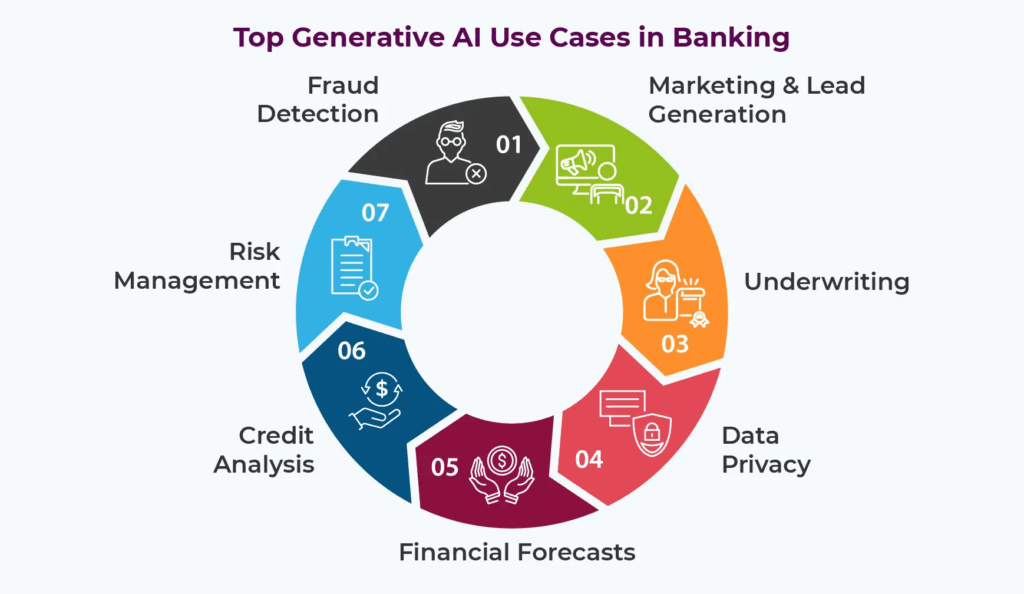
Now, Generative AI (GenAI) emerges as the next major advancement. Unlike traditional AI, which focuses on predictions and classifications, generative AI can create entirely new content, such as text, images, code, and reports. For the BFSI sector, this doesn’t just represent futuristic possibilities but offers practical, cost-saving solutions that can streamline operations and elevate customer experience. Here are five real-world examples of how generative AI is making a difference.
>> Read more about our top 15 use cases in BFSI industry!
1. Personalized Customer Communication
Business Impact: GenAI enables banks and insurers to send highly personalized emails, SMS messages, and chatbot responses. Rather than generic updates, businesses can tailor communication to individual customer profiles (In10stech, 2025). This level of personalization helps build stronger relationships with customers by addressing their unique needs and preferences. By leveraging real-time data, GenAI ensures that every communication is relevant and timely, enhancing customer satisfaction and loyalty.

Example: If you’ve applied for a home loan, instead of receiving a standard message like “Your loan is under review,” you might get something more specific: “Hi Riya, your home loan application is under review. Based on your documents, here’s the expected timeline and next steps.” This is driven by Natural Language Generation (NLG), which turns structured data (such as loan type, status, and customer name) into personalized, natural-sounding text.
2. Fraud Detection and Reporting
Business Impact: Traditional AI already helps spot unusual transaction patterns, but the volume of alerts can overwhelm investigators. Generative AI adds value by summarizing these alerts into concise, actionable reports (Desai, 2025). This allows investigators to quickly prioritize high-risk cases and take timely action. By converting complex data into easily digestible insights, GenAI enhances decision-making and reduces the time spent on manual analysis.
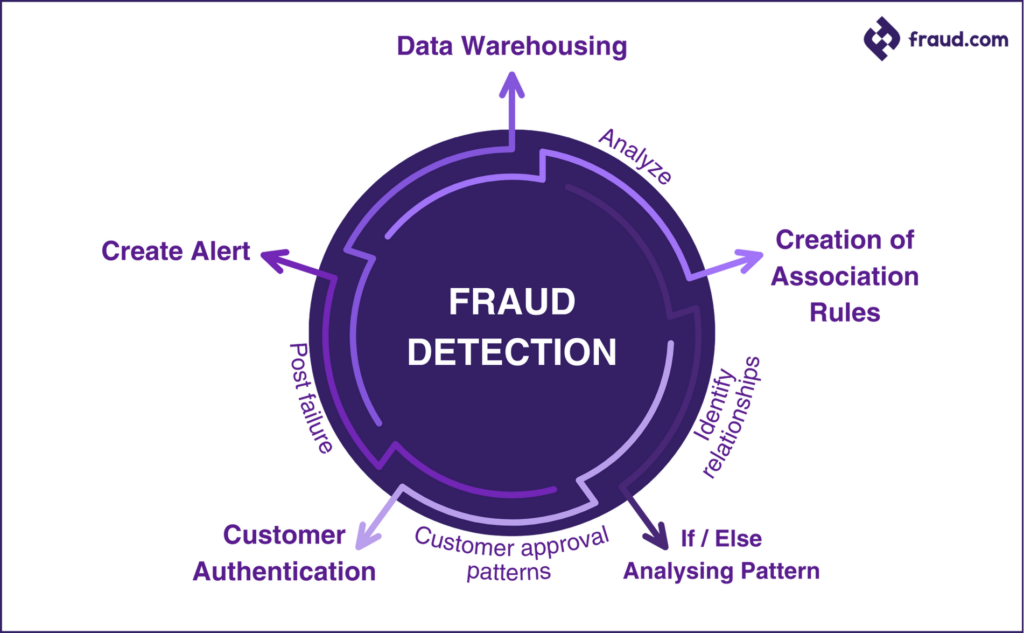
Example: If a system flags 200 suspicious activities, GenAI can generate a summary like: “Out of 200 flagged cases, 70 involve cross-border transfers over $10,000, mostly from accounts less than 6 months old.” This is powered by anomaly detection algorithms combined with text summarization, helping investigators act more efficiently.
3. Automated Financial Advice and Wealth Management
Business Impact: GenAI allows wealth managers and banks to offer personalized portfolio insights and recommendations automatically, making financial advice more accessible (Forbes, 2025). This automation enables wealth managers to provide clients with tailored advice at scale, without compromising on personalization. As a result, even clients with smaller portfolios can receive high-quality, data-driven insights to guide their investment decisions.

Example: Instead of receiving a generic quarterly update, you might get: “Your portfolio grew 7% last quarter, mainly from technology stocks. Based on your risk profile, here are three diversification options.” This combines financial analytics with generative AI, which translates raw data into easy-to-understand, personalized recommendations.
4. Claims Processing in Insurance
Business Impact: Insurance claims often involve lots of paperwork, such as forms, invoices, and medical records. GenAI speeds up the process by automatically reading documents and drafting settlement letters. This automation not only accelerates the claims process but also reduces the chances of human error in document handling. By generating accurate, consistent settlement letters, GenAI improves operational efficiency and enhances customer satisfaction through quicker resolution times.
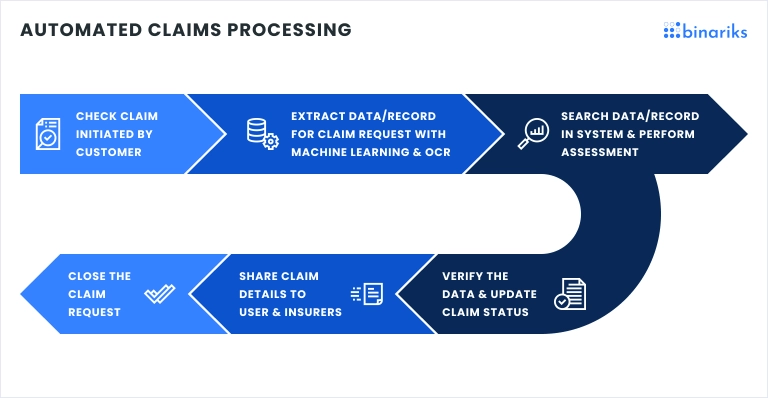
Example: After a car insurance claim is filed, GenAI could generate a settlement letter like: “Based on your policy and the garage’s estimate of ₹45,000, your approved claim amount is ₹40,500. The balance will be transferred within 5 working days.” This is made possible by combining Optical Character Recognition (OCR) to extract data with natural language generation to create human-friendly documents.
5. Regulatory Compliance and Reporting
Business Impact: Compliance teams spend considerable time preparing reports for regulators. GenAI automates this process, ensuring accuracy and consistency while saving time. By streamlining the creation of regulatory reports, GenAI reduces the manual effort required, allowing compliance teams to focus on more strategic tasks. Additionally, its ability to adapt to different regulatory requirements ensures that reports remain up-to-date and aligned with evolving compliance standards.

Example: A typical compliance report might read: “This quarter, 98% of loan disbursements complied with KYC norms. Only 2% needed additional verification, mainly in SME accounts.” This process relies on data-to-text generation, where structured compliance data is converted into formal, regulator-ready reports.
6. The Common Thread in BFSI Industry
All five use cases share a similar process:
- Data Source: Customer records, transaction logs, claims forms, compliance databases.
- AI/ML Preprocessing: Identifying patterns, extracting entities, or calculating insights.
- Generative AI Layer: Transforming raw data into human-readable text or reports.
- Human-in-the-Loop: Experts review, refine, and approve the output before action is taken.
Generative AI isn’t replacing humans but rather handling repetitive tasks like drafting and summarizing, allowing professionals to focus on strategy, decision-making, and customer relationships.
Conclusion
Generative AI has moved beyond being a buzzword and is now a practical tool for the BFSI sector. Whether in personalized communication, fraud detection, financial advice, claims processing, or regulatory compliance, it is streamlining workflows and improving customer service. The future of BFSI will not only rely on technology but on the synergy between human expertise and AI’s ability to generate, summarize, and personalize at scale. In this collaboration, AI serves as a powerful assistant, while humans continue to make the critical decisions.
